












CIBSE updates TM59 guidance to strengthen overheating assessments in homes
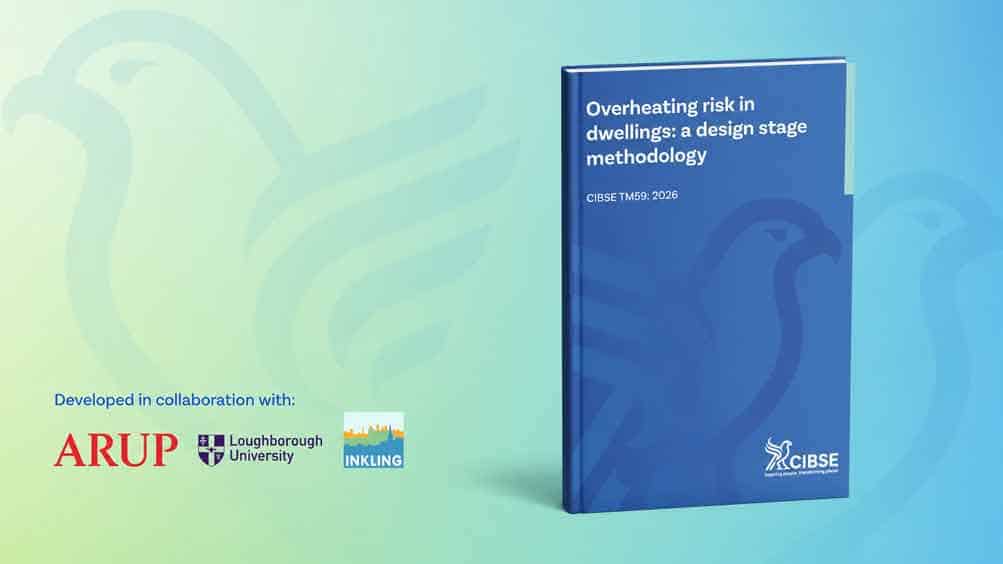
UK – CIBSE has launched an updated version of its TM59 overheating guidance, developed with Arup, Loughborough University and Inkling, to improve how overheating risk is assessed in new homes and major residential refurbishments.
The revised publication, CIBSE TM59 Overheating risk in dwellings: A design stage methodology, is referenced within Part O of the Building Regulations and is widely used by designers, consultants and building performance specialists to assess overheating risk in residential buildings.
Overheating becomes a growing design issue
The update comes as overheating continues to move higher up the residential design agenda, particularly where design features such as extensive glazing, insufficient ventilation or poor adaptation to future climate conditions increase the risk of excessive indoor temperatures.
CIBSE said the revised publication reflects the latest research, industry experience and a growing understanding of how homes need to perform in a warming climate.
The guidance is intended to support the design of homes that remain safe, comfortable and resilient, while reducing unnecessary reliance on energy-intensive cooling systems.
2050s climate data included
A major change in the updated guidance is the requirement for all homes to be assessed under unconstrained conditions using future weather files representing the 2050s climate.
This places greater emphasis on passive design measures at an early stage, helping project teams consider building form, glazing, shading, ventilation and other design decisions before active cooling is considered.
Overheating is no longer a future risk – it’s a present reality for households across the UK, and the built environment sector needs authoritative, evidence-based guidance to respond
Ahmed Hegazi, Head of Knowledge and Digital at CIBSE
Bedroom overheating and ceiling fans
The revised TM59 also includes updated approaches to assessing overheating in bedrooms, informed by recent research by Loughborough University.
It also introduces revised modelling guidance for ceiling fans, recognising their role as a low-energy measure for improving occupant comfort.
Professor Kevin Lomas of Loughborough University, executive editor of the publication, said the new version provides a “blueprint” for assessing overheating risk in new dwellings and homes undergoing major refurbishment.
He said the revised methodology should improve the consistency and clarity of overheating analysis and reporting.
Supporting residential design and retrofit
CIBSE said the updated guidance will help strengthen design-stage decision making and improve consistency in overheating assessments.
The publication is expected to be relevant across residential design, natural ventilation, building performance, sustainability, retrofit, refurbishment, climate resilience and government policy.
CIBSE TM59 Overheating risk in dwellings: A design stage methodology is available now from the CIBSE Knowledge Portal.


