










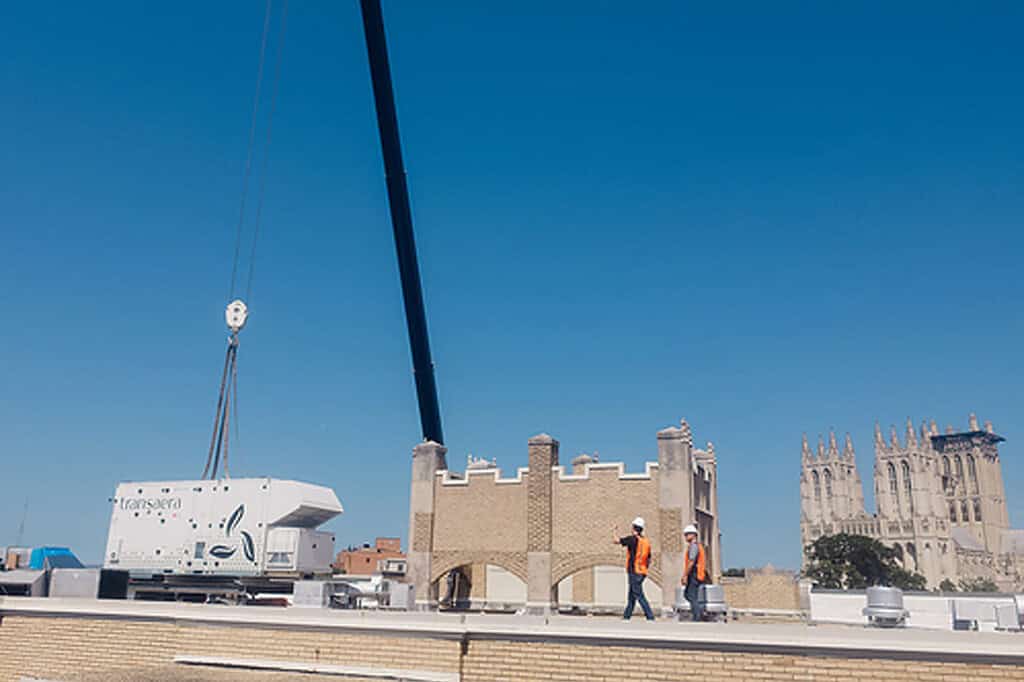
Transaera to test heat pump using metal-organic frameworks in US apartment building
USA – A heat pump system using metal-organic frameworks (MOFs) to remove moisture from incoming air is being installed in a Washington DC apartment building, where it will operate alongside conventional HVAC equipment to compare energy performance. Developed by US company Transaera, the technology is designed to reduce the energy required for dehumidification, with the manufacturer claiming seasonal energy savings of up to 40%.
The project marks Transaera’s first deployment in the multifamily residential sector. Supported by a $125,000 grant from The Clean Fight’s National Deployment Grant Fund, it will generate performance data that the company says will be published to help building owners assess the technology.
How metal-organic frameworks reduce energy consumption
Transaera‘s system combines heating, cooling and dehumidification in an all-electric dedicated outdoor air system (DOAS), which conditions ventilation air separately from a building’s main heating and cooling equipment.
Unlike conventional DOAS systems that rely on cooling coils to remove moisture from incoming air, sometimes followed by reheating, Transaera uses MOF-based solid desiccants to capture water vapour before the air passes through the cooling coil.
Metal-organic frameworks are highly porous materials with a large internal surface area that allows them to capture water vapour through adsorption. The captured moisture can subsequently be released using relatively low-temperature heat, allowing the material to be reused.
The system uses heat rejected by the refrigeration process to regenerate the desiccant, allowing it to capture moisture continuously without requiring a separate high-temperature heat source.
The company claims its technology can reduce seasonal energy consumption by up to 40% compared with conventional packaged direct expansion systems. However, this figure is not a measured result from the Washington installation.
Performance comparison in residential buildings
The installation will provide Transaera with an opportunity to evaluate its technology in multifamily housing, following earlier commercial deployments.
By operating alongside conventional equipment in the same building, the project is intended to provide comparative operating data under real conditions.
Building owners deciding how to electrify need operating cost reduction and want to see performance data from a building like theirs before they commit
Sorin Grama, CEO and co-founder of Transaera
The company has not specified when the results will be published. Its announcement also does not disclose the installed system’s heating and cooling capacity or refrigerant.
Building on Amazon deployments
Transaera’s systems are already operating across Amazon’s logistics network following a six-month field trial and a subsequent multiyear agreement.
The company is also expanding manufacturing capacity through a partnership with KCC Manufacturing, announced in September 2026. The arrangement covers equipment production, controls integration and engineering support at KCC’s facilities in Kentucky.
Founded in 2018 by engineers and materials scientists from the Massachusetts Institute of Technology, Transaera is seeking to commercialise its humidity-control technology across commercial and residential building applications.
The Washington project will help establish how the technology performs in multifamily housing, particularly in humid climates where dehumidification can represent a significant proportion of cooling energy consumption.


