














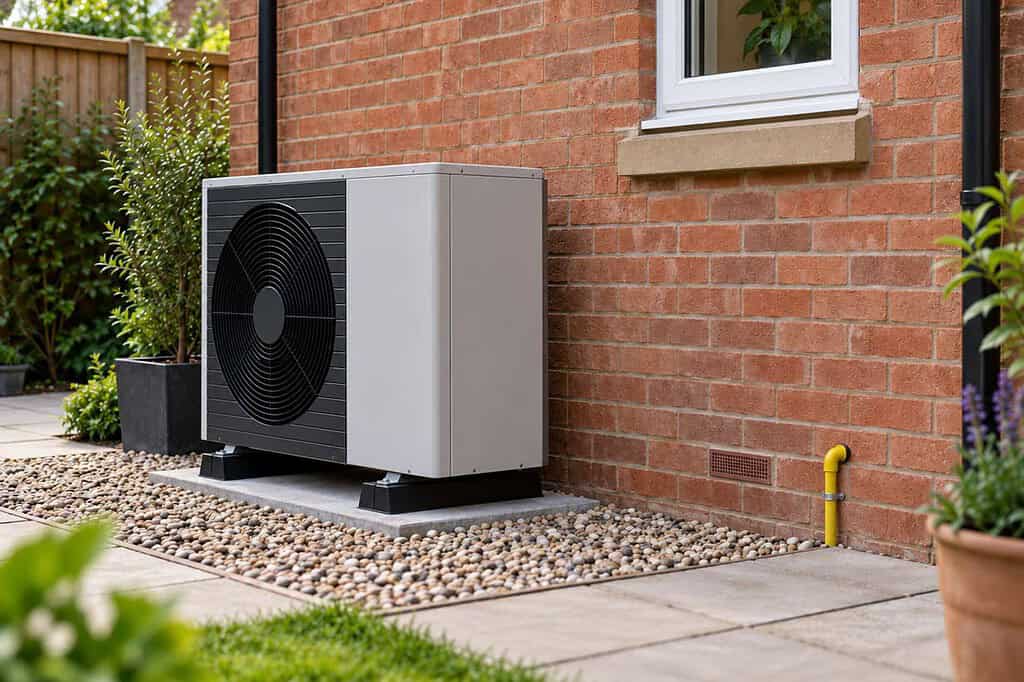
Government examines gas network costs as more homes switch to heat pumps
UK – The UK Government is examining whether electricity consumers could help pay for Britain’s gas networks as more households switch to heat pumps and other low-carbon heating technologies.
A call for evidence published by the Department for Energy Security and Net Zero (DESNZ) on 22 October considers how the costs of maintaining gas infrastructure, recovering past investment and disconnecting properties should be shared as gas demand declines.
Currently, gas network investment costs are recovered through charges paid by gas consumers. However, as households move away from gas, these costs could fall on a shrinking number of customers, potentially increasing bills for those who remain connected.
This is a separate issue from the impact of declining energy consumption, which Ofgem has previously highlighted can increase unit rates when fixed costs are recovered over fewer units of energy.
The government is particularly concerned about the impact on households unable to switch to alternative heating systems.
Who should pay?
The document examines several approaches, including continuing to recover costs from gas consumers, sharing some costs with electricity users, introducing government-backed financial mechanisms or combining different arrangements.
One option considers electricity consumers contributing to gas network costs where the infrastructure continues to support wider energy system security.
However, DESNZ acknowledges that transferring costs to electricity bills could weaken the financial incentives to adopt heat pumps and other low-carbon technologies, adding to existing concerns about the electricity-to-gas price differential.
No preferred approach has been identified, and the government is seeking evidence before considering policy changes.
Cost of disconnecting from gas
The review also examines who should pay when households permanently disconnect from the gas network.
Under existing arrangements, customers requesting a voluntary disconnection generally pay the network operator directly. However, where a gas meter has been removed and the supply remains unused for 12 months, safety-related disconnection requirements apply, with costs recovered through regulated gas network charges.
As more properties move away from gas, the number of disconnections could increase, raising questions about how the associated costs should be shared. The government also recognises that coordinated disconnection programmes could offer opportunities to reduce costs.
Ofgem has already introduced accelerated depreciation for new gas distribution network investment from April 2026, allowing those costs to be recovered sooner. However, this does not resolve the longer-term question of how historic investment should be recovered as gas demand falls.
The call for evidence, which covers Great Britain, closes on 23 December 2026 and will inform future decisions on gas network investment and disconnection charging.


