










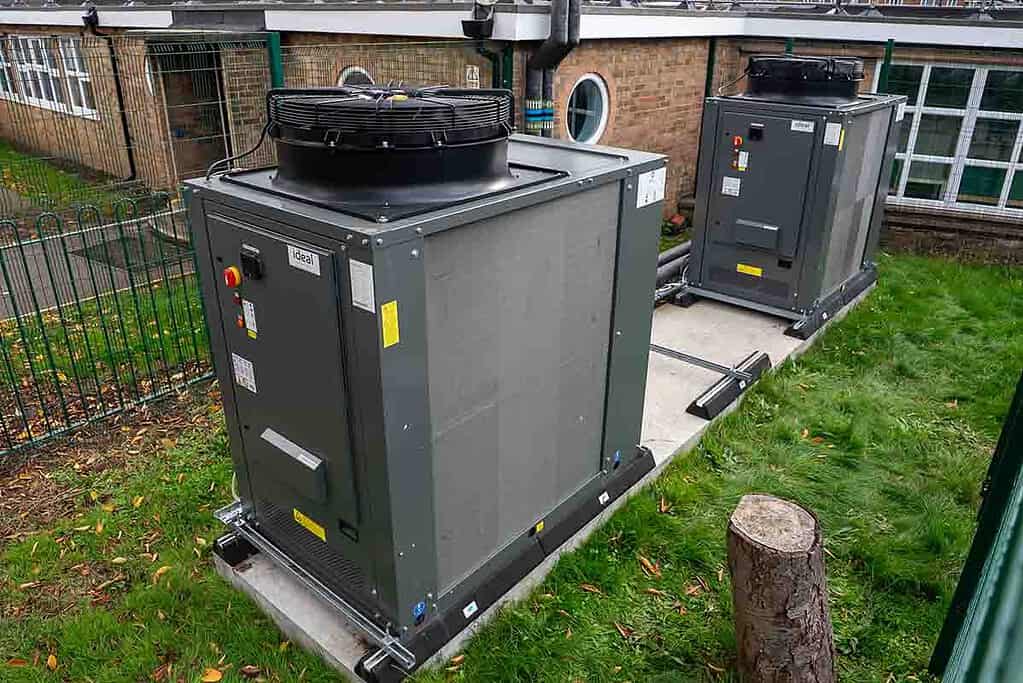
UK – Jason Allen, Commercial Product Manager – Heat Pumps, Ideal Commercial Heating, explores the different challenges posed by propane heat pump systems.
As commercial heating moves towards lower carbon technologies, R290 is becoming an increasingly common refrigerant choice for air source heat pumps thanks to its very low global warming potential (GWP) of just three and ozone depletion potential of zero, as well as its strong thermodynamic performance. It can also support relatively high flow temperatures, making it well suited to many commercial heating applications.
However, R290 – also known as propane – is classified as an A3 refrigerant, meaning it has low toxicity but high flammability. That does not make R290 unsuitable for commercial heating, but it does mean that designers, consultants, contractors and maintenance engineers need to understand how its different risk profile affects specification, installation and ongoing maintenance.
What regulations apply?
As you might expect with a highly flammable refrigerant, there are strict regulations that need to be adhered to. The two main ones are the Dangerous Substances and Explosive Atmospheres Regulations 2002 (DSEAR) and the EU Directive ATEX. In broad terms, DSEAR provides the UK legal framework for assessing and controlling risk of fires and explosions in the workplace, while ATEX regulates equipment and protective systems.
For commercial R290 heat pumps systems, the practical starting point should always be an appropriate DSEAR-based risk assessment. This means identifying the hazardous substance, assessing the likelihood of a release, defining hazardous zones, identifying potential ignition sources, and putting suitable control measures in place. Responsibility then needs to be assigned to key individuals, such as the installer or main contractor.
In addition to DSEAR and ATEX, there are also a host of technical standards to be adhered to, including BS EN 378 for refrigerating systems and heat pumps and EN 60079-10-1 for the classification of areas where explosive gas atmospheres may occur.
Why does location matter?
One of the most important characteristics of R290 is that it is denser than air. If a leak occurs from the heat pump, propane can disperse downwards and accumulate in low-lying areas. Drains, manholes, pits, cellars and other depressions therefore need careful consideration when locating a heat pump. Doors, windows, ventilation openings and air intakes also need to be considered so that potential leaked refrigerant cannot migrate into occupied areas.
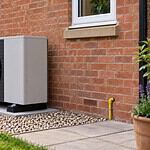
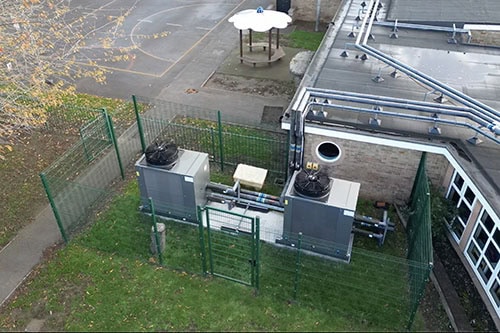
This is why R290 heat pump installations use exclusion and safety zones. The exclusion zone is the immediate area around the heat pump where a flammable atmosphere could potentially form following a refrigerant leak. Ignition sources should therefore not be present within this area.
A wider safety zone may also surround the exclusion zone. Although refrigerant concentrations are expected to be lower in this area, measures still need to be taken to avoid gas accumulation and other potential hazards.
How are exclusion zones determined?
Exclusion and safety zones are not universal fixed distances. Their size and shape depend on several factors, including refrigerant charge and the geometry of the installation. The amount of refrigerant within the system matters because a larger charge means a greater potential release.
Ventilation is equally important. In an open, well-ventilated location, leaked gas can disperse more readily whereas in more confined positions, such as corners or areas surrounded by walls, dispersion may be restricted.
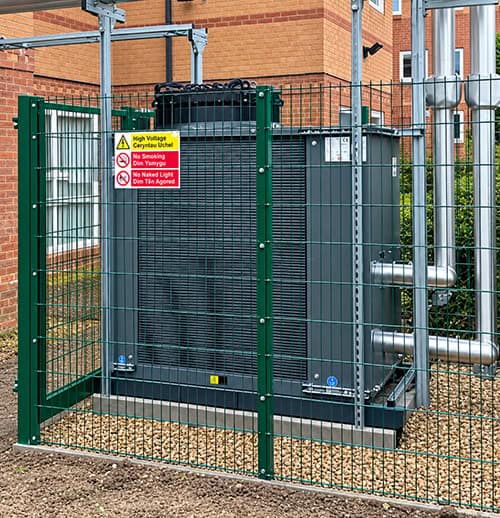
As a result, the same heat pump could require a different installation approach depending on whether it is positioned in open ground, against a wall, in a corner, on a flat roof or as part of a cascade. One requirement that is universal though is the need for safety signage.
What should be avoided around the heat pump?
Within an exclusion zone, the main priority is to remove possible ignition sources – including naked flames, smoking, sparks, unsuitable electrical equipment (this is where ATEX rated equipment will be required) and hot surfaces – and prevent leaked refrigerant from accumulating.
As I have already mentioned, the position of drains, sewers, manholes, doors, windows and ventilation openings should also form part of the installation assessment.
It is equally important to think beyond the initial installation. A system that is safe when first installed could be compromised in future if a new drain, electrical item or building opening is introduced within the designated safety area. Maintaining the integrity of the original installation is therefore an important part of long-term safety.
What other installation considerations matter?
Exclusion and safety zones are only part of the overall design. Manufacturers will also specify minimum clearances to allow safe servicing and ensure sufficient airflow around the heat pump.
Roof-mounted units introduce further considerations, including wind exposure, structural support, noise and the risk of snow, foliage or debris restricting airflow.
Cascade installations also need careful planning so that the positioning of multiple units allows both operational clearances and the required safety zones to be maintained.
Hydraulic design may also contribute to safety. For example, a deaerator can remove gases from the heating water circuit and can provide an additional safeguard if refrigerant enters the water circuit in the unlikely event of a heat exchanger failure.
Leak detection may also be required, particularly where the unit contains 3kg and above of R290 or there is a risk of gas accumulating in an enclosed or restricted area.
What changes when it comes to maintenance?
Many maintenance requirements for R290 heat pumps will be familiar, but the refrigerant’s flammability introduces some additional precautions.
Any work involving the refrigerant circuit should be carried out by engineers qualified in handling flammable refrigerants.
A safe working area should be established before servicing begins, with ignition sources kept away and suitable R290-compatible leak detection equipment used where necessary.
Maintenance should also include checking the surrounding safety zones to ensure that no new hazards have been introduced since installation.
Where propane detection equipment is installed, it must also be maintained and calibrated in accordance with the system designer’s requirements and the manufacturer’s instructions.
Is R290 refrigerant a safe option?
R290 systems can be safely used in commercial heating when they are properly assessed, designed, installed and maintained. The key is to recognise that R290 has a different risk profile from many traditional refrigerants. Good design manages much of that risk. Correct positioning, sufficient ventilation, appropriate clearances, control of ignition sources and an understanding of how leaked refrigerant could disperse all contribute to a safe installation.
As R290 becomes increasingly common, commercial heating professionals need to become as comfortable with managing its safety requirements as they are with its environmental and performance benefits.
To find out more about this subject, book Ideal Commercial Heating’s CIBSE-approved ‘‘Safety considerations for R290 commercial air source heat pumps’ CPD at idealcommercialboilers.com/cpd-courses.


