
















Zeuner repurposes 20-year-old school ground loop in Clydebank
UK – Ground source heat pump specialist Zeuner is repurposing a 20-year-old ground loop system at a secondary school in Clydebank, avoiding the need for full replacement of the existing ground source infrastructure.
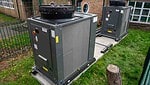
The Coventry-based company is delivering a new 350kW ground source heat pump system using R290 refrigerant to work with the school’s existing ground loop. Zeuner said the approach can reduce disruption and make better use of existing assets where ground arrays and associated infrastructure remain suitable.
Many early commercial heat pump systems are now approaching plant replacement age. Zeuner says existing ground loops may still have value if they are correctly assessed and matched with updated heat pump technology.
Heating, cooling and heat recovery
At the Clydebank school, the new 350kW system is designed to use natural refrigerants and provide heating and cooling. It replaces the previous R410a system and will serve a laboratory requiring close temperature control and operate with a heat recovery circuit from the building.
Zeuner said the design will provide improved heating and cooling performance, alongside dedicated chilled water provision.
Founder Chris Reilly said: “Balancing the layout and design of the existing installation with the school’s specific needs requires we take a tailored, consultative approach.
“Zeuner’s engineers take time to scrutinise the existing system and understand the client’s needs. This collaborative approach also means we can offer the best solution to meet precise specifications, such as the lab’s pinpoint climate requirements.
Many commercial heat pump installations are approaching end-of-life, but that doesn’t necessarily mean costly replacement.
Chris Reilly, Zeuner
“Building managers need to be aware that there are solutions that can save significant amounts of money, while enhancing the energy efficiency of the existing estate over the long-term.
“Not all upgrades focus on the electrical consumption and thermal output of a system. To take a truly holistic approach we need to look at all critical elements of the system architecture. The previous system contained 123.19 CO2e tonnes refrigerant. Utilising the latest upgrade to R290, we have reduced the entire plant to 0.02 CO2e tonnes refrigerant. A significant saving of 123.17 CO2 equivalent tonnes (99.9% saving).”


