


















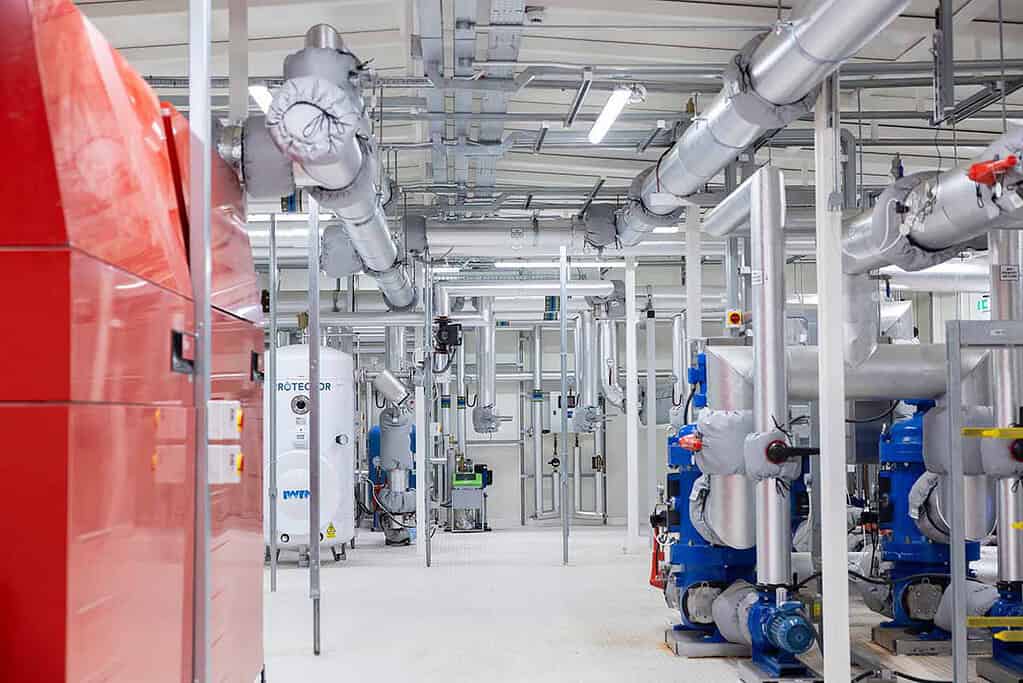
UK – A new mine water heat network in County Durham is now fully operational following the commissioning of an energy centre designed to ultimately supply low-carbon heating and hot water to around 750 homes.
The scheme uses heat pump technology to increase the temperature of naturally heated water from the abandoned Dawdon Colliery, with projected carbon savings of approximately 2,600 tonnes of CO₂ annually.
The Seaham Garden Village development is one of Great Britain’s latest large-scale mine water heating schemes and demonstrates how existing mine water treatment infrastructure can be adapted to provide renewable heat for residential developments. It captures geothermal heat from water already being pumped to the surface for environmental treatment.
Delivered through a partnership involving the Mining Remediation Authority, Karbon Homes, Esh Construction, Vital Energi and Durham County Council, the project forms part of the wider 1,500-home Seaham Garden Village development on Durham’s heritage coast.
Using existing mine water infrastructure
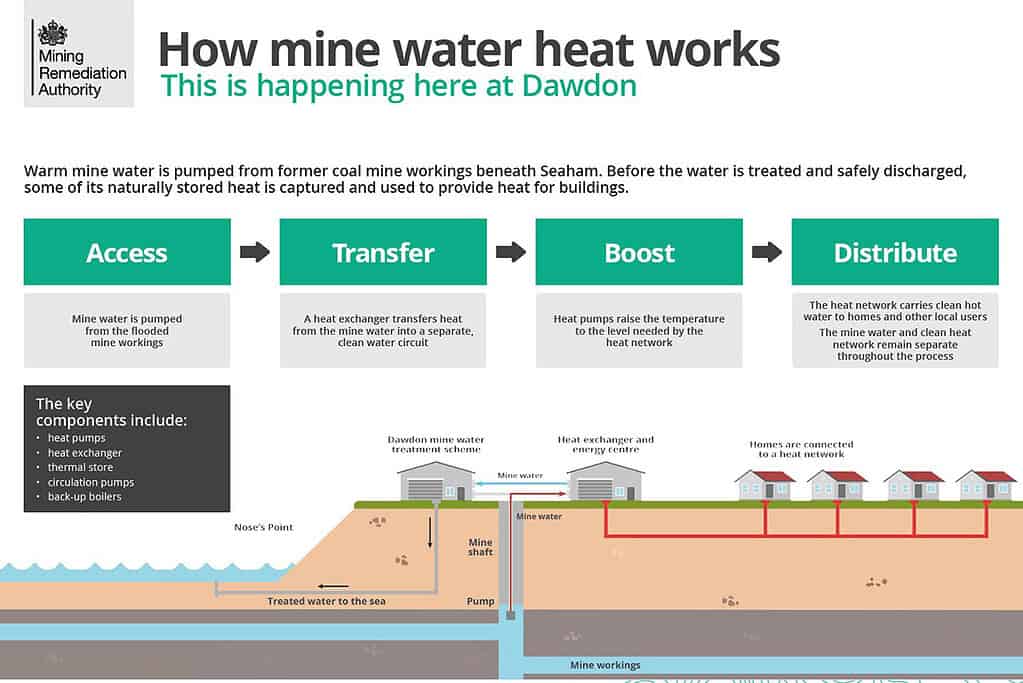
The heat network draws on water from the Mining Remediation Authority’s existing Dawdon mine water treatment scheme, which was originally developed to protect local water resources from contamination associated with historic mining operations.
Mine water is naturally warmed by geothermal processes underground, providing a relatively stable temperature throughout the year. At Seaham, heat exchangers transfer thermal energy from the mine water into a separate heating circuit. A water source heat pump then increases the temperature to a level suitable for distribution through the district heating network, supplying space heating and hot water to connected properties.
Carbon savings and energy security
The network is currently serving some of the first homes at Seaham Garden Village and will expand as the development grows. In time, it is expected to provide low-carbon heat to up to 750 Karbon Homes properties and predicted to save approximately 2,600 tonnes of CO₂ annually, equivalent to nearly 65,000 tonnes over 25 years.
By using an existing underground thermal resource, the system reduces reliance on conventional fossil fuel heating and offers residents a more stable source of heat.
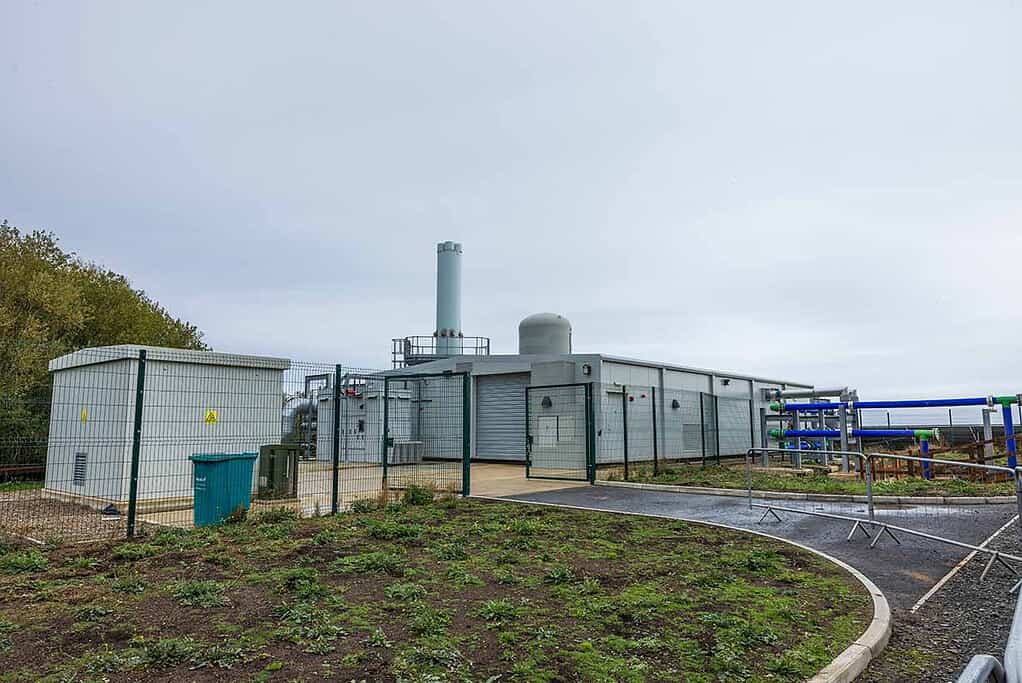
The project received funding through the government’s Heat Networks Investment Project and will operate under Vital Community Energi’s Energy Services Company (ESCo) model. Vital Energi has delivered the energy centre that uses a water source heat pump to extract and boost heat from the disused mine water.
Rob Callaghan, Managing Director at Vital Community Energi, said: “I am proud that Seaham Garden Village will operate under our complete Energy Services Company (ESCo), marking another significant milestone in the expansion of our owned and operated heat networks. As with all our ESCo projects, customers remain our top priority. That is why we have ensured residents benefit from stable and efficient heating and hot water, delivering lasting benefits into a community directly affected by the closure of the mines.”
Repurposing former mining assets
The Seaham installation is part of a growing number of projects demonstrating the potential for mine water geothermal energy across former coalfield communities.
Andrew Simpson, Head of Innovation, By-Products and Services Delivery at the Mining Remediation Authority, welcomed the successful commissioning of the network. “It is exciting to see our Dawdon mine water treatment scheme successfully transition to dual use, continuing to safeguard water while now supplying sustainable heat to local homes,” he said. “Seaham Garden Village shows how geothermal energy from disused mines can be replicated across the country.”
The Mining Remediation Authority estimates that around 25% of Great Britain’s homes and businesses are situated above former coal mines, creating opportunities to develop similar low-carbon heating networks.
The organisation currently operates more than 80 mine water treatment schemes nationwide, some of which could potentially be adapted to support heat recovery applications.
Potential for wider deployment
Seaham follows the development of mine water heating networks in Gateshead and Wales, adding to the growing evidence base for geothermal heat recovery from former coal mining infrastructure.
For the heat pump and district heating sectors, the project highlights the potential to integrate large-scale heat pump technology with existing public infrastructure, particularly where residential development is located close to established mine water treatment facilities.
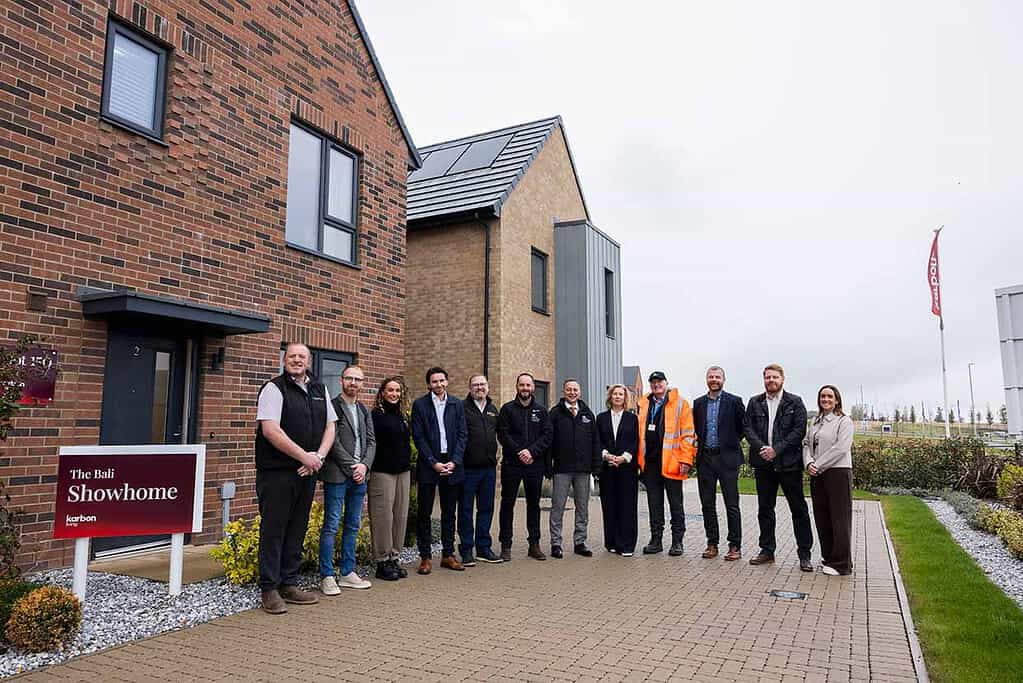
Sarah Robson, Executive Director of Development and Asset Management at Karbon Homes, said residents had been moving into the development since the beginning of the year and had responded positively to the new homes and heating arrangements.
Durham County Council is also examining opportunities to apply the technology elsewhere.


