








South Korea backs Jeju heat pump rollout with 70% subsidy
South Korea – South Korea is targeting the deployment of air-to-water heat pumps across 2,460 homes on Jeju during 2026, with systems incorporating thermal storage and virtual power plant controls to support wider energy flexibility. Subsidies cover 70% of eligible installation costs, leaving participating households with a maximum contribution of KRW 4.2 million, around £2,300.
The programme is one of the country’s first significant residential heat pump deployment schemes and is being used to establish practical experience ahead of wider adoption. Jeju’s initial allocation covered 1,042 households, followed by a further 1,418-home allocation for the second half of the year.
Households receive 70% support
Under the Jeju scheme, eligible installations can cost up to KRW 14 million per household, with central and local government support covering 70%, or a maximum KRW 9.8 million. The householder contributes the remaining 30%, up to KRW 4.2 million, with any expenditure above the eligible cost ceiling also falling to the homeowner.
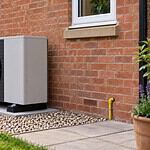
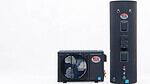
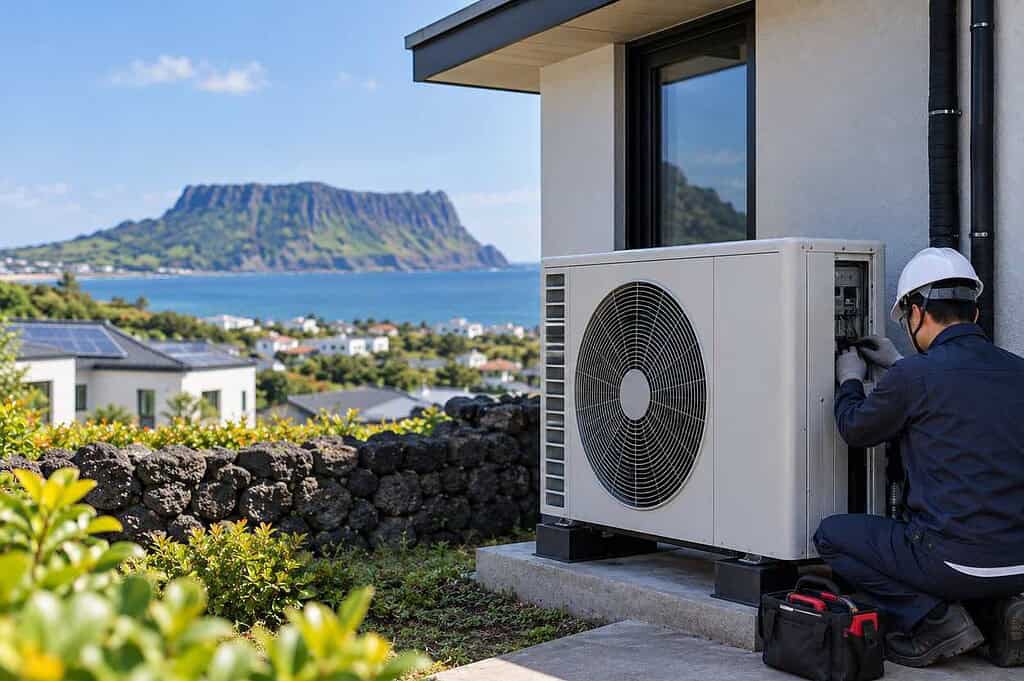
The supported package extends beyond the heat pump itself. The specification includes an air-to-water heat pump below 20kW, a 300–500 litre thermal storage tank and virtual power plant (VPP) control equipment, allowing participating systems to be connected and managed as part of a wider flexible energy network.
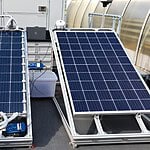
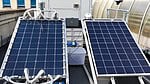
Eligible homes must also have, or be planning to install, at least 3kW of solar PV.
This means the programme is supporting an integrated residential energy system rather than simply subsidising the cost of an outdoor heat pump unit.
Jeju is providing an early indication of how residential heat pumps could operate as part of a wider flexible electricity system alongside solar generation and thermal storage.
Samsung and LG among suppliers
Samsung Electronics, LG Electronics, Daesung Heat Enersys and Carrier are involved in the programme.
LG has been allocated 855 of the 2,460 homes across the two phases, while Samsung received the largest allocation in the second phase, covering 501 households. Daesung Heat Enersys was allocated 323 homes and Carrier 167 in the second-half programme.
The first 1,042 households were selected following more than 2,500 applications, with installations beginning during the summer.
The 2,460 figure represents the programme’s 2026 deployment target and allocation rather than the number of systems already installed.
Jeju used as an early test bed
South Korea’s Ministry of Climate, Energy and Environment has identified 2026 as the starting point for accelerating residential heat pump deployment, initially concentrating support in warmer regions including Jeju and Gyeongnam.
National funding provides 40% of eligible installation costs, with participating local authorities contributing a further 30%.
Jeju’s inclusion of VPP controls is significant because it allows individual heat pump systems to form part of a coordinated energy network. In principle, loads such as heat pumps and thermal stores can be managed collectively to respond to electricity supply conditions and make greater use of locally generated renewable power.
A separate government-backed demonstration on the island is also integrating solar PV, batteries, electric vehicles, heat pumps and AI-based energy management across a small group of homes.
With 2,460 residential systems targeted during 2026 and wider national expansion planned, the Jeju programme provides an early practical test of South Korea’s approach to combining domestic heat pumps with renewable generation, thermal storage and flexible electricity demand.


