















How commercial heat pumps can help improve efficiency and local air quality
UK – Rinnai’s Peter Seddon explains how commercial heat pumps can improve system efficiency and contribute towards national decarbonisation targets.
With heat pumps becoming a viable option for business owners who require heating and hot water, Rinnai has published three case studies demonstrating the advantages of heat pump adoption in commercial applications.
Case Study 1
The first dedicated science park in Wales features a three-storey BREEAM excellent facility providing offices, laboratories, and workshops for up to 700 people. It functions as a central hub for start-ups, research teams and established technology focused organisations.
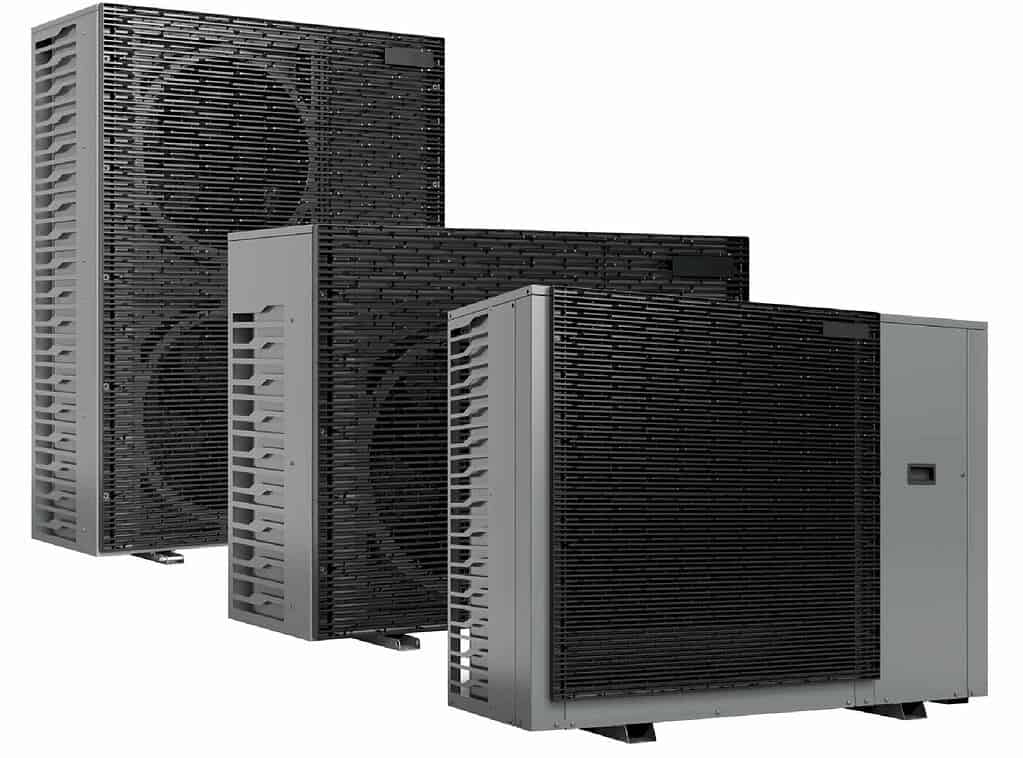
The park selected a custom Rinnai R290 High Temperature ASHP system with full Modbus BMS integration to support its low carbon heating and hot water strategy. The installation includes 10 27kW R290 heat pumps, sourced from Rinnai’s 21–27 kW R290 range.
Each unit delivers a SCOP of 3.21 at a 65°C flow temperature, supported by a custom designed 3000 litre buffer vessel engineered specifically for the site’s needs. The system is capable of producing high temperature output up to 75°C, and all units were supplied with anti corrosion protection to ensure durability in the park’s coastal environment.
The science park required a robust, energy efficient, low carbon heating and hot water system suitable for a large mixed-use building. Specific needs included:
• High water temperatures for diverse building demands
• Meaningful carbon reduction to support sustainability goals
• Strict height and weight limitations for rooftop installation
• Resistance to corrosion due to coastal air conditions
To meet these challenges, the client sought a partner offering custom engineering, technical expertise and full mechanical design support. Rinnai delivered a complete, site-specific solution including:
- 10 × 27kW R290 ASHP units, with anti-corrosion coating for coastal protection.
- A custom built 3000L buffer vessel
- Full Modbus BMS integration
- Optimised rooftop configuration to minimise height and distribute system weight
Rinnai’s R290 technology is low-GWP with quiet operation and enables water temperatures up to 75°C. For tailored system selection the client also accessed Rinnai’s design support tools. The science park now benefits from a future-proof, low carbon heating and hot water system that reduces operational impact while maintaining high performance.
The Rinnai range also includes scalable larger systems for future expansion, such as the 40–410kW R290 commercial series.
Case Study 2
A landmark commercial office development in central London required a high-performance domestic hot water (DHW) solution capable of meeting peak occupier demand, while fitting within a tightly constrained plantroom envelope.
A leading building services engineering consultancy worked with Rinnai’s low-GWP commercial heat pump technology to design a DHW system comprising two 40kW R290 air source heat pumps, complete with plate heat exchangers and DHW storage.
The resulting solution meets a daily hot water demand of approximately 1,600 litres, achieves a rapid recovery time of around 85 minutes at -7°C ambient temperature, and delivers a future-ready refrigerant strategy with integrated safety and control measures embedded into the system design.
The system delivered multiple performance and operational benefits:
- DHW recovery achieved in under 90 minutes
- Reliable winter performance validated at -7°C ambient.
- Low-GWP R290 refrigerant, supporting future F-Gas and decarbonisation compliance.
- Enhanced system safety, via integrated refrigerant gas detection
- Flexible monitoring and control, enabled through Modbus connectivity.
Case Study 3
A cascade of R290 air source heat pumps with thermal store was installed at a well-established visitor attraction focused on environmental education and community engagement. The site required a future-proof heating system aligned with its sustainability ethos.
The system delivers a total of 71.2kW of heating output at design conditions and has been engineered to provide high temperature performance with a 70°C flow. As a result, the solution achieves improved energy efficiency while significantly reducing the site’s overall carbon impact, supporting both operational performance and sustainability goals.
A key technical challenge was achieving reliable output at low ambient temperatures (-4°C) without compromising efficiency. Traditional systems raised concerns around rising operational costs and carbon emissions.
A cascade system incorporating two 50kW R290 air source heat pumps was selected from the Rinnai low-GWP heat pump range. R290 refrigerant was chosen due to its very low global warming potential and high efficiency performance, helping meet decarbonisation goals.
System design highlights:
- Designed to operate at 70/65°C (flow/return) at -4°C ambient
- Output at design conditions: 35.6kW per unit (71.2kW total)
- Nominal flow rate: 2.148 L/s per ASHP
- Head pressure: ~105 kPa (with pump kit)
A thermal store was integrated between the primary and secondary circuits to optimise system stability and demand response. The secondary circuit operated at 70/59°C, requiring careful control of return temperatures.
Close coordination ensured consistent 70/65°C operation between the ASHP cascade and thermal store, maintaining optimal performance across the system.
Key outcomes:
- Reliable high temperature heating, even in winter conditions
- Reduced carbon footprint through use of R290 refrigerant
- Improved system efficiency via precise flow/return temperature management
- Flexible, scalable cascade system for resilience and load matching
To explore Rinnai’s full commercial product range: https://www.rinnai-uk.co.uk/product


