














UK – As the UK accelerates its transition to lower-carbon heating, off-grid homes face a different set of challenges from those connected to the gas network. Greg Banham, Commercial Director for Navien UK, looks at what this means for installers navigating the transition.
Heat pumps will play an important role in reducing emissions from heating, but they aren’t a one-size-fits-all solution. Off-grid homes are typically ageing properties with higher heat demands, existing high-temperature solutions, and limited electrical infrastructure, all of which can affect what is technically and financially practical.
But this doesn’t make heat pumps the wrong solution. It means that the conversation needs to start with the property, not the technology. Installers will therefore need to understand the whole heating system and balance its technical requirements with each homeowner’s needs, budget and expectations. This whole-system approach will be central to successfully decarbonising off-grid homes.
Why off-grid homes need a closer look
Many homes in rural areas are not connected to the gas network and rely on oil for heating. So replacing an oil boiler can involve more work than simply removing one appliance and installing another. Older and larger properties can have higher heat demands, while existing heating systems may have been designed around higher flow temperatures and developed over many years.
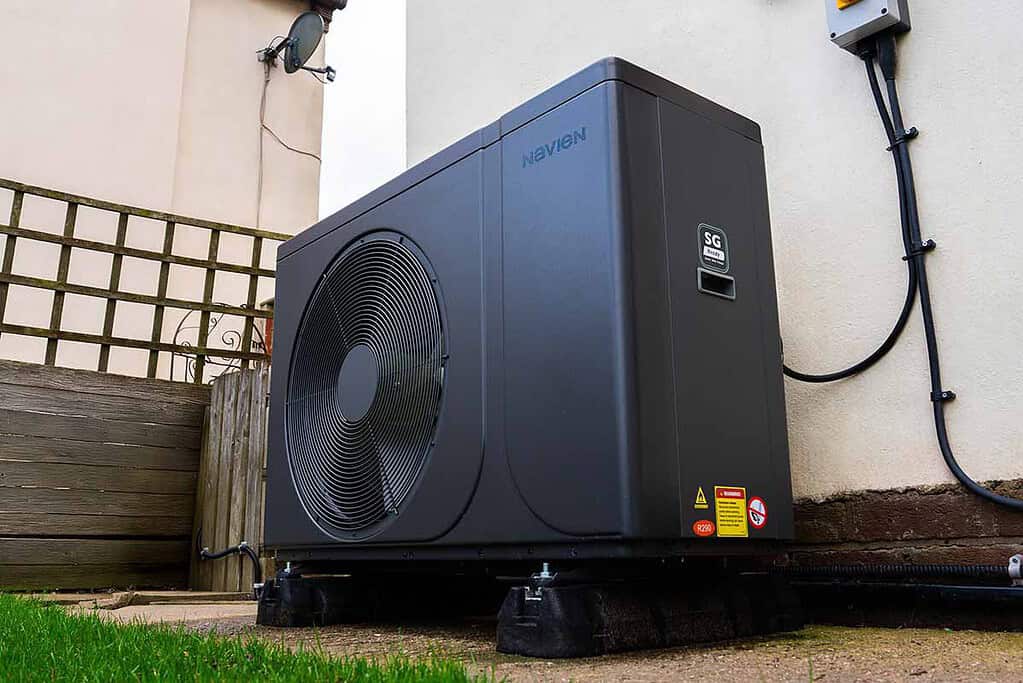
A heat pump can be an effective solution for these homes, but its suitability depends on the property and the system already in place. Before making a recommendation, an installer needs to assess whether the existing radiators can deliver enough heat at lower flow temperatures and whether the electrical supply is sufficient. They must also identify a suitable location for the outdoor unit that will not create additional problems.
The hot water system also needs to be considered, particularly where an oil combi boiler is being replaced. Moving to a heat pump may mean introducing a cylinder, while changes to controls, pipework or installing new radiators due to flow requirements could also be needed. In some rural properties, there may be a range cooker or other existing appliance that runs on oil, but the homeowner wants to keep it, while larger homes may already have cascading boilers to meet their heating demand.
Taking a whole-system approach is therefore essential, as it enables installers to identify the heating solution that best meets the needs of the property and the homeowner, while considering what is technically achievable and financially viable.
A heat pump is not always a simple swap
Moving from an oil boiler to a heat pump can involve changes across the wider heating system, largely because heat pumps generally operate at lower flow temperatures than traditional boilers. A heat loss calculation is an important starting point, showing how much heat the property actually needs, after which the installer can assess whether the existing radiators, insulation and other elements can deliver it.
For example, some homes may need larger radiators, improvements to insulation or changes to pipework and controls before a heat pump can work effectively, while the physical installation also needs careful planning. The outdoor unit needs a suitable location and access, and the internal equipment may require changes to a system that has been in place for many years.

For homeowners, moving to a heat pump may involve additional cost and disruption, particularly where several parts of the heating system need to be upgraded at the same time. Timing can also affect the decision: a planned replacement gives the homeowner more opportunity to prepare for the work, whereas an unexpected boiler failure or replacement in the middle of winter may make a like-for-like replacement the more practical option.
None of this means heat pumps should be ruled out. Where the property is suitable, and the system is correctly designed and installed, they can provide an effective lower-carbon heating solution. The important point for installers is that the property needs to be assessed before the technology is chosen.
The policy picture is changing
The Government is supporting the move away from fossil fuel heating through measures including the Boiler Upgrade Scheme. Since the 21st July 2026, eligible off-gas-grid properties in England and Wales replacing oil or LPG heating can receive up to £9,000 towards an air-to-water or ground source heat pump. Provided the installation meets the scheme requirements.
This additional support can reduce the upfront cost for homeowners, but it does not necessarily cover every change that may be needed. If a property requires new radiators, insulation, electrical work or changes to its hot water system. The costs of this still need to be considered when looking at whether a heat pump is the right option.
The Government’s November 2025 consultation on alternative clean heating solutions also reflects the fact that some properties will present greater challenges than others. It looked at alternative technologies suitable for low-carbon heating where a heat pump or heat network may be difficult to install, while making clear that it does not propose installing a low-carbon option where it is unsuitable for the property.
For installers, this is likely to mean having a broader understanding of the technologies available rather than working towards a single replacement route. Heat pumps will suit many properties, while others may need improvements first or could benefit from different approaches as the market and policy develop.
Putting the homeowner at the centre
The technical side of the transition is only part of the decision, as homeowners also need to consider the cost, disruption and timing involved in changing their heating system.
Someone replacing a working oil boiler may have time to plan improvements and consider a heat pump, whereas a customer whose boiler has failed may need a reliable solution quickly and have less scope for major changes to the property. The same applies to homeowners who want to reduce their carbon emissions but cannot afford a large-scale heating upgrade all at once.
This is where installers have an important role to play because they can see the property first-hand, understand how the existing system works and have a practical conversation with the homeowner about what they need.
That advice needs to consider the technical requirements within the realities of budget, as well as realistic timings and potential for disruption, giving the customer a clear understanding of what each option involves. It also means that the installer of the future may need to become less of an “appliance installer’ and more of a heating systems advisor, capable of evaluating a building, customer preference and the available technologies.
Therefore, if heating is becoming a system rather than an appliance decision, manufacturers need to support installers with the process, rather than simply providing the heat source. Installers will need reliable products backed by clear technical information, training and responsive support that helps them work confidently across different heating systems.
Bringing off-grid homes on the journey
Conversely, Net Zero will not look the same in every home, particularly when it comes to off-grid properties where the building, existing heating system and available infrastructure can vary considerably. Heat pumps will be an important part of the transition, but the most suitable solution will depend on the individual property and the homeowner’s circumstances.
For installers, the challenge is to bring all of these factors together and give customers advice that works in practice, rather than simply following the direction of the wider market. By assessing each home properly and understanding the options available, installers can help customers make informed decisions while continuing to move towards lower-carbon heating.
Ultimately, decarbonisation succeeds when the solution fits the home, not when the home is forced to fit the solution.