












High temperature heat pumps: the key to smooth retrofits
UK – Rinnai’s Head of Technical, Pete Seddon, discusses how high temperature heat pumps can play a vital role in the reduction of on-site disruption to UK customers for both domestic and commercial installations.
Heat pumps are a key element in the move towards national decarbonisation but can be problematic when installing. When a low temperature (LT) heat pump is installed into a domestic or commercial setting a noticeable amount of disruption can be involved. Typically, many changes to the heating system may need to be made, including radiators and pipework.
- Radiators may have to be replaced as heat pumps operate at a lower flow temperature (between 35°C–55°C) than a traditional gas boiler (60°C–75°C). To provide enough heat for the property, new radiators may potentially have to be installed.
- Pipework may also experience some changes. LT heat pumps require a a higher level of water flow rate than boilers to operate efficiently and larger pipes transfer heat effectively and efficiently at lower temperatures.
High temperature (HT) heat pumps generally do not demand any adaptations to radiators or pipework when retrofitting. Because they produce water that is heated at similar levels to a gas boiler, there are no additional requirements to rip out radiators or replace pipework. The design of a HT heat pump means that an installation will work with existing infrastructure, not against.
When compared to a standard heat pump installation, a HT heat pump is less problematic, quicker and therefore reduces internal dust and material waste when retrofitting.
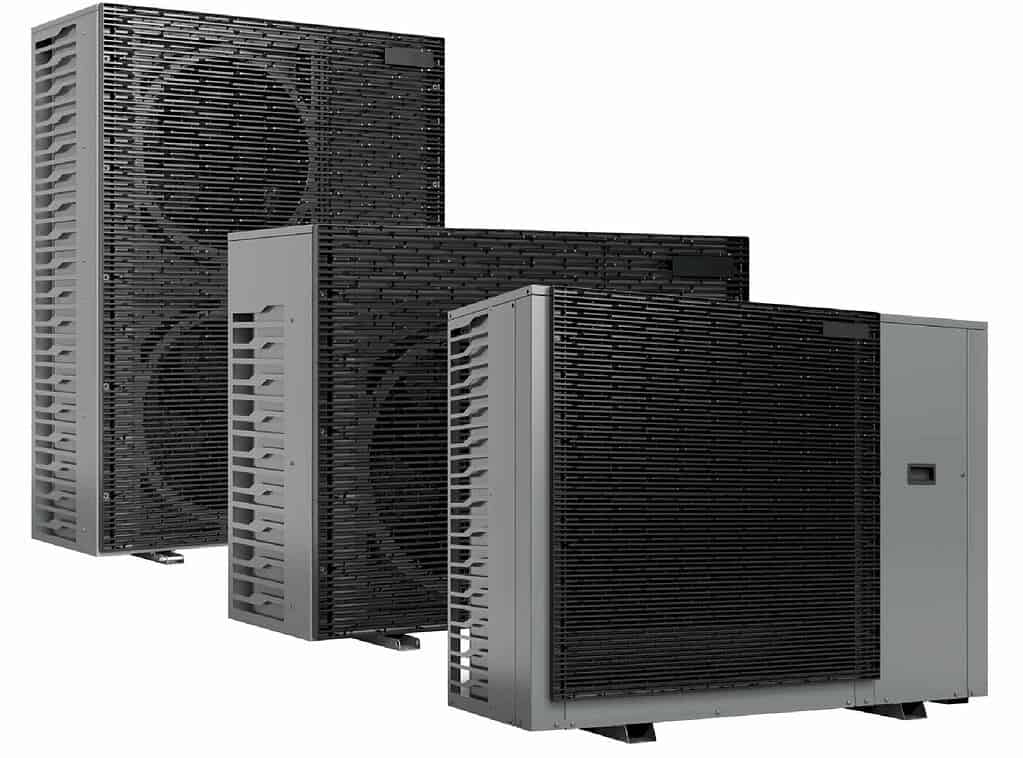
Rinnai R290 40kW and 50kW HT air source heat pumps are the largest of this product range and are suitable for domestic hot water (DHW) and heating projects. They can be cascaded for greater heating and DHW output and represent a market-leading low-GWP solution. Both variants boast a SCOP of A+++ due to the increased efficiency achievable with the use of R290 refrigerant gas, meaning that the range of is one of the most cost-effective and economical heating solutions available.
All R290 models have low noise capability, making them suitable for areas with prohibitive sound legislation. The units also offer a smart control system with demand side response functionality, helping to deliver a future-proof and sustainable solution.
Rinnai recognises the importance of design support and system efficiency. To support this and our customer commitment, we utilise Seasonal Performance Factor (SPF), capital expenditure and operational expenditure to deliver your project’s design towards the best possible solution. To take advantage of these services use our “Help me choose” service, by following this link Help me choose a product :: Rinnai UK (rinnai-uk.co.uk)
Rinnai also offers a range of products across a number of technological platforms and energies. Its hybrid heat pump systems can accept clean electricity, natural gas and solar thermal, while Rinnai Smart Systems can be programmed to switch fuels to maximise overall performance.