


















ADE calls for electricity discount to cut cost of heat networks
UK – The Association for Decentralised Energy (ADE) has called for targeted electricity price support and increased grant funding for heat networks, arguing that government intervention could help unlock up to £100bn of private investment and make district heating more competitive with gas.
The recommendations are set out in its Cost of Heat: Ensuring Affordability and Investment in District Heat Networks report. Published by ADE: Heat Networks, the report is based on original research led by Tim Starley-Grainger of SG Energy Consulting.
Electricity costs identified as barrier
ADE says the commercial competitiveness of heat networks is being constrained by electricity costs and the high upfront capital cost of network infrastructure.
It proposes a targeted electricity discount that would remove fixed electricity costs from heat networks, alongside increased grant support and a Heat Network Catalytic Fund intended to reduce financing costs. The electricity measure would directly benefit electrically driven networks, including those using large-scale heat pumps.
Heat pump networks compared with individual systems
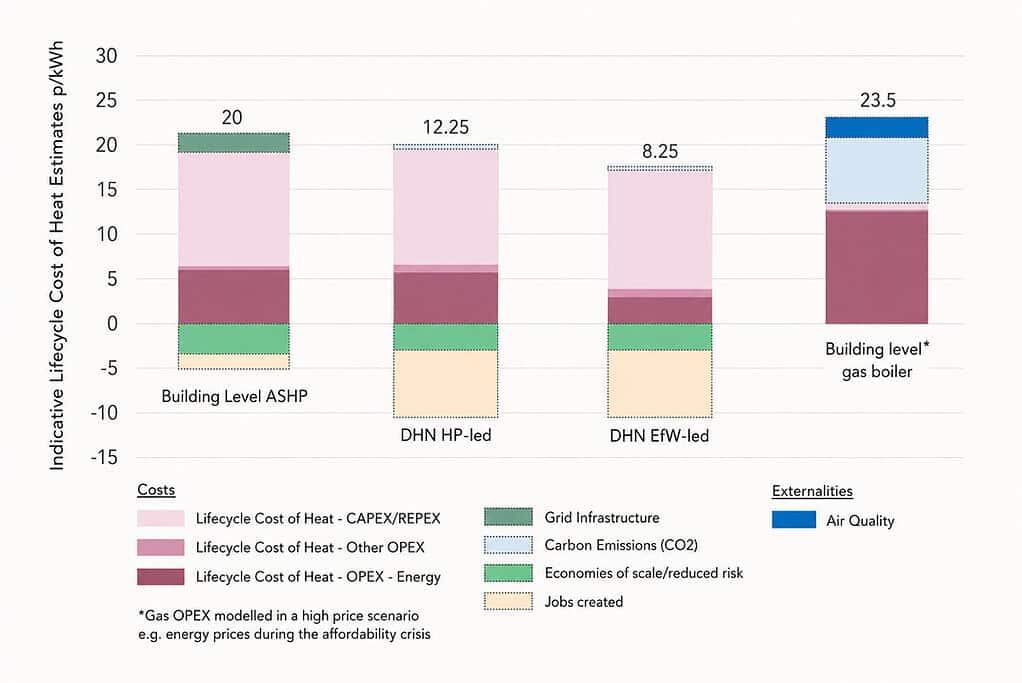
ADE’s indicative lifecycle cost analysis compares building-level air source heat pumps with heat pump-led district networks, energy-from-waste heat networks and gas boilers.
When wider factors including carbon emissions, grid infrastructure, air quality, jobs and economies of scale are included, the analysis places heat pump-led district networks below both individual air source heat pumps and gas boilers on overall lifecycle cost.
When only capital and operating costs are considered, ADE says district heat networks remain cheaper than individual air source heat pumps, although gas heating retains an advantage because of the high capital cost of constructing the network.
£10bn government commitment proposed
For longer-term support, ADE proposes a Regulated Asset Base model, suggesting it could initially be applied to around 15 to 20 large-scale projects.
It also calls for the Treasury to commit £10bn to district heat network deployment through to 2035 and for an enabling framework allowing DESNZ and Ofgem to establish appropriate investment support mechanisms.
ADE says that without government support, the sector could miss out on £100bn of private investment, 100,000 jobs and £86.5bn of electricity system benefits.
The report says heat networks are anticipated to supply at least 20% of UK building heat demand by 2050, underlining the potential importance of electricity pricing and investment support as the sector expands.


