














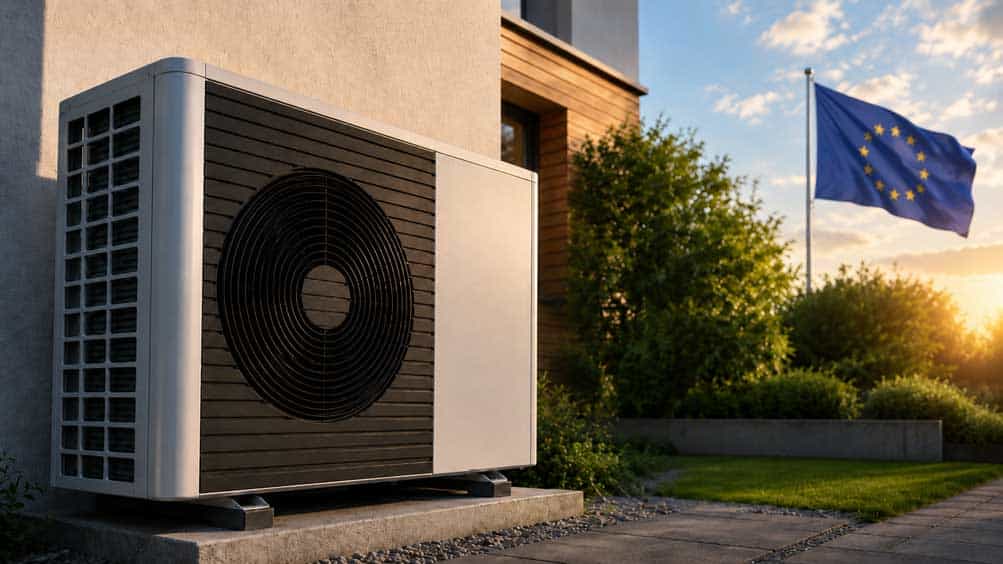
EU electrification plan sets four million annual heat pump target for 2030
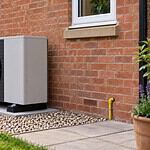
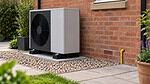
Belgium – The European Commission has placed heat pumps at the centre of its new Electrification Action Plan, with a target of around four million installations a year by 2030, up from 2.4 million in 2025. The plan also proposes an indicative target, subject to impact assessment, for electricity to account for 46% of EU final energy consumption by 2040, alongside measures covering energy prices, finance, flexibility, industrial heat and workforce development.
Heat pumps become a formal delivery target
Increasing annual installations from 2.4 million to around four million would require the European market to grow by roughly two-thirds within five years. For manufacturers, distributors and installers, the target provides a clearer basis for investment in production capacity, training and supply chains, although delivery will depend on national implementation.
Buildings are identified as a priority because residential and commercial properties account for around half of EU gas consumption. In residential buildings and collective heating systems, heat pumps can meet space heating, cooling and hot-water needs, which the plan says account for about 80% of energy use.
The plan says switching from a gas boiler to a heat pump could cut the average EU household’s heating bill by up to 60%, depending on national energy prices and the building and system involved. Heat pump deployment is therefore linked with insulation and wider building renovation.
To ensure it delivers, the European Commission must swiftly convert it into legislation and measures to enact at national level
Jozefien Vanbecelaere, policy director, European Heat Pump Association
Electricity prices remain a central barrier
Member States are encouraged to reduce their electricity-to-gas price ratios to no more than 2.5 for households and 2 for industry by 2030. These are policy indicators rather than binding national targets at this stage.
The plan also states that electricity should not be taxed more heavily than gas and proposes changes to network charges, taxation and fossil-fuel subsidies. The aim is to strengthen the operating-cost case for heat pumps without relying solely on installation grants.
Measures to address upfront costs include social leasing, subsidies, low- or zero-interest loans and on-bill finance, allowing households to repay installation costs through their energy bills.
The Commission will also explore introducing a clean heat market mechanism by 2027. This could be used to increase the share of clean heating systems supplied and narrow the upfront cost difference between heat pumps and fossil-fuel equipment. Greater use of public procurement and improved price transparency for consumers are also proposed.
Flexibility broadens the heat pump proposition
The action plan treats heat pumps as both flexible electrical loads and heating appliances. Shifting demand away from peak periods and towards times of higher renewable generation could reduce system costs, particularly where installations include smart controls, thermal storage and flexible tariffs.
The Commission plans to revise network codes to improve the integration of heat pumps, geothermal systems, storage and electric vehicles. For the HVAC sector, this places greater emphasis on controls, interoperability, commissioning and performance monitoring.
A system’s value will increasingly depend on its ability to respond to tariffs and grid signals, rather than appliance efficiency alone.
Industrial heat creates a second market
Industrial heat pumps are also identified as a significant opportunity. The Commission estimates that direct electrification is technically feasible for 60% of industrial energy demand currently supplied by fuels, particularly in lower- and medium-temperature processes.
Support measures include a proposed €100 billion Industrial Decarbonisation Bank linked to revisions to the EU Emissions Trading System, including a €30 billion ETS Investment Booster. A second Innovation Fund industrial heat auction is planned for 2026, alongside sector-specific electrification roadmaps and measures supporting thermal storage and waste-heat recovery.
Skills will determine delivery
Workforce capacity remains a potential constraint. The Commission cites an International Energy Agency estimate that the EU will need 500,000 skilled heat pump workers, compared with 165,000 in 2024, to meet its installation ambitions.
Proposed measures include stronger vocational training, improved portability of qualifications and closer cooperation between industry and education providers.
The plan gives the heat pump sector a stronger EU-level demand signal, but its effect will depend on legislation and implementation by Member States.


