













Industrial heat pumps move up Copeland’s sustainability agenda
Germany – Industrial heat pump technology has moved further up Copeland’s sustainability agenda, with the global HVACR manufacturer using its FY25 Global Impact Report to highlight expansion into high-temperature process heat. The report points to the acquisition of SPH Sustainable Process Heat, a German innovator in high-temperature industrial heat pumps, as extending Copeland’s capability into applications requiring temperatures up to 180°C.
Industrial heat takes a larger role
SPH expands Copeland’s industrial heating portfolio, with target applications including food and beverage, chemical processing and industrial drying. These are sectors where electrification has historically been more challenging, but where higher-temperature heat pump systems are increasingly being positioned as an alternative to fossil fuel-based heat.
Heat pumps across the portfolio
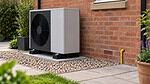
Copeland has spent more than 25 years developing heat pump technology. Its current portfolio includes hydronic systems, R290-compatible products, low-sound scroll compressors, inverter swing rotary compressors and enhanced vapour injection technology.
The company’s wider portfolio includes compressors, drives, heat pumps, controls, power electronics and smart thermostats for heating, cooling, cold chain and industrial applications. Commercial and industrial markets account for 34% of Copeland’s net sales, covering areas including commercial buildings, data centres, district heating, cold storage, process heating and cooling.
Refrigerants and connected controls
The report places refrigerant transition alongside heat pump development, with Copeland pointing to lower-GWP and natural refrigerants including CO₂, R290 and ammonia, as well as A2L refrigerants. The emphasis on R290 is particularly relevant as heat pump manufacturers continue to develop systems capable of delivering higher water temperatures while responding to changing refrigerant regulation.
The report also links decarbonisation to controls and demand management. Copeland’s thermostats and building controls have more than 15,000MW of connected energy under control across residential and commercial markets, supporting demand response and grid stability.
Emissions targets
Copeland reports a 20% year-on-year reduction in Scope 1 and 2 greenhouse gas emissions in FY25, alongside a 1% reduction in Scope 3 emissions. It has set targets to reduce absolute Scope 1 and 2 emissions by 55% and Scope 3 emissions by 32.5% by FY33, using FY23 as the baseline.


